

All Collections

June 15, 2026 • 2 Minute Read
Letter from the Pastor June 15, 2026
Dear Faith family, We welcomed new members into the church family two Sundays ago: Melody Callegan and the Kowatz family. It's always a good day when God brings new people into our lives. Membership at Faith is a commitment to encourage and support one another, using the spiritual gifts God has given each of us. It's mutual, and we're glad Melody and the Kowatzes have made it with us. We also celebrated baptism this past Sunday morning. Frank Kowatz and his son took that public step of obedience to Christ. Watching someone go under the water and come up again never gets old. We rejoice with them and with all of heaven. We had a surprise visit from T.J. Sipes last night. T.J. is our Awana missionary, and he gave us an update on his work and what's happening with Awana. We're grateful he stopped in. One more thing for the calendar. We're beginning to collect supplies for our annual Back-to-School Backpack Giveaway. This is one of the ways Faith serves our community every summer, and we'll need help to fill 250 to 300 backpacks for kids heading back to school. Details will follow in the Weekly Updates Post Collection (Weekly Bulletin)https://www.meetfaith.org/posts/collections/weekly-bulletin Grateful to serve with you, Pastor Leger
June 6, 2026 • 1 Minute Read
Letter from the Pastor June 6, 2026
This past week, we hosted the DM2 Youth Conference, and we spent it together in the Book of Galatians. The young men from the 3D Training Center did a great job teaching. What encouraged me most was watching some of our own teenage young men take sessions of their own during the week. Seeing them open the Word and teach it to their peers tells me the next generation is being built right here at Faith. Around 30 came out, young people and adults alike. A friend of the church also donated boxes of loose-leaf paper this week, and we'll put it to use this fall for our Annual Back-to-School Backpack giveaway. One person's giving will help children in our community start the school year ready. Paul wrote to the Galatians, "And let us not grow weary while doing good, for in due season we shall reap if we do not lose heart" (Galatians 6:9, NKJV). That is what this week looked like at Faith. Young men learning to teach, and a friend giving so that kids are cared for. Grateful for you, Pastor Leger

May 26, 2026 • 2 Minute Read
Pastoral Letter
Dear Faith Family, I've been thinking about you this week. Not about anything in particular, just about you. The faces I see on Sunday morning. The names I pray for during the week. The people God has given me the privilege of serving. I want you to know something. I'm grateful for you. I'm grateful for the ones who show up faithfully, week after week, even when life is busy and tiring. I'm grateful to those who serve faithfully. I'm grateful for the parents working hard to raise their kids in the Lord, and for the older saints whose prayers hold this church together more than any of us realize. I want to remind you of something simple today. God sees you. He sees the part of your life nobody else knows about. He sees the prayer you've been praying for years with no answer yet. He sees the loved one you're worried about. He sees the way you keep showing up for people, even when you're running on empty. He hasn't forgotten you. He never will. Hebrews 6:10 puts it plainly: "For God is not unjust to forget your work and labor of love which you have shown toward His name, in that you have ministered to the saints, and do minister." You're not invisible to Him. The small acts of love and faithfulness you've offered this week, the ones nobody else saw, were seen by the One who matters most. So keep going. Keep loving your family. Keep showing up for your friends. Keep serving in the place God has put you. Keep trusting Him with the things you can't fix. It's an honor to be your pastor. Blessings,
Pastor Leger
June 7, 2026 • 3 Minute Read
Camp Pearl 2026 Summer Schedule
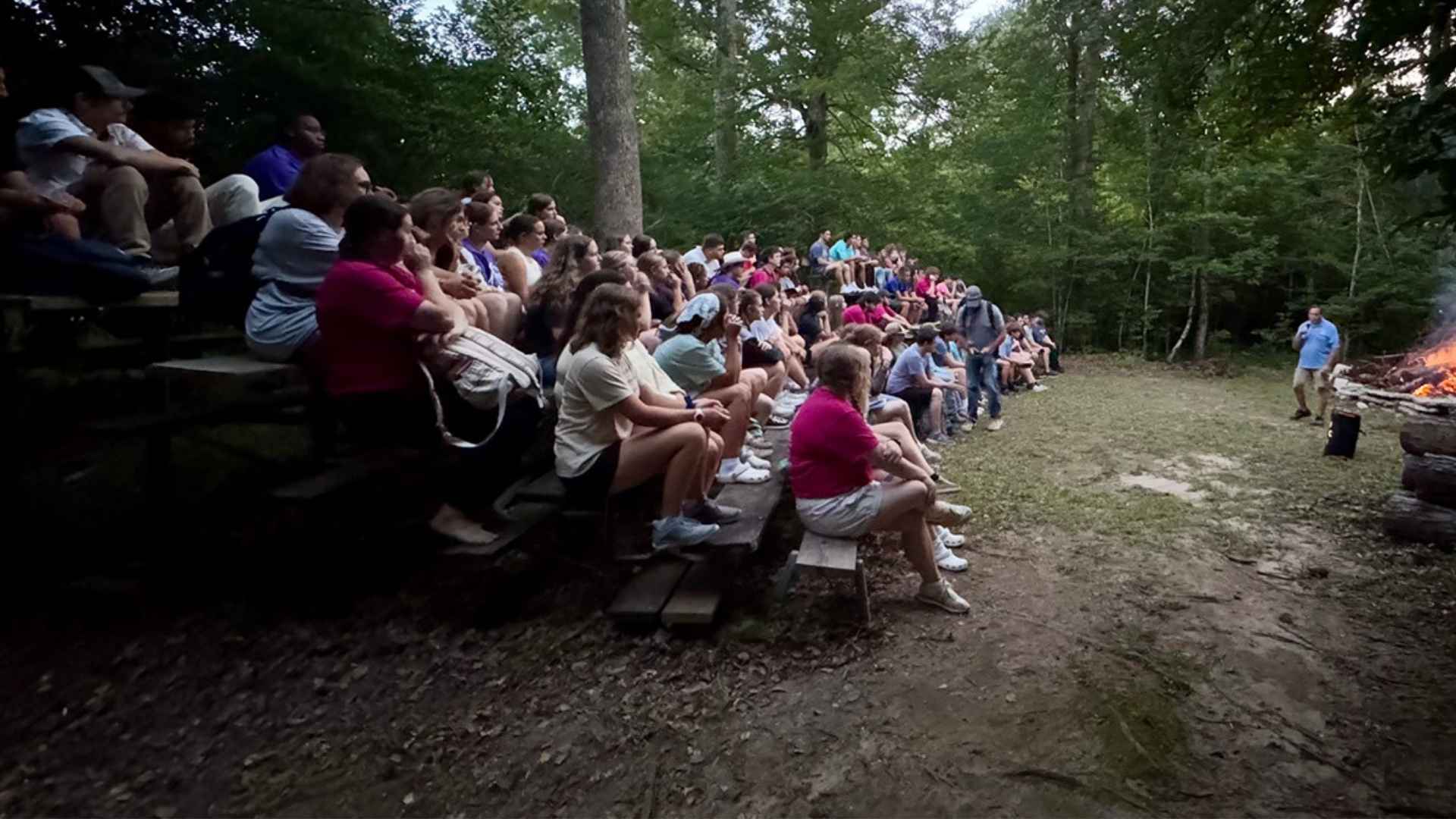
A week at Camp Pearl changes how a kid sees the summer. They spend the day hearing about God and playing games. They sleep in a cabin with new friends and hear about Jesus from people who mean it. Camp Pearl has been doing this in Reeves, Louisiana since 1947. It's a Christian camp on a 56-acre campus, run by Bible churches across our area, including Faith Bible Church. The week is full of swimming and chapel sessions where kids hear the gospel. Registration for summer 2026 is open, and the weeks are filling. The 2026 Schedule 5-Day Summer Camps (Grades 3-12) Students will enjoy a fun, spiritually enriching week filled with chapel sessions, classes, team-building activities, swimming, games, and more! (Mon-Fri) Cost - $250 Canoe Trip Fee (Sr. High Week only) - $35 Check-in - 5pm Monday evening (in the gym) Check-out - 7pm Friday evening following chapel Register your child for the grade they'll enter in fall 2026. 3-Day Adventure Camp (Grades 6-8) Adventure Camp is a perfect camp for students going into 6th-8th grade who love the great outdoors! Students will enjoy many outdoor and off-campus activities and learn skills in a Christ-centered environment. (Girls Mon-Weds, Boys Weds-Fri) Girls Adventure Camp (June 15 - 17): Activities will include craft projects, swimming, fishing, canoeing, learning outdoor cooking skills, and more! The girls' 3-day camp will be followed by the Boys Adventure Camp. Boys Adventure Camp (June 17 - 19) Activities include fishing, swimming, canoeing, archery, shooting range, low ropes course, and more! Cost - $135 Girls Adventure Camp Check-in - 10am Monday morning (in the office) Check-out - 5pm Wednesday evening Boys Adventure Camp Check-in - 10am Wednesday morning (in the office) Check-out - 5pm Friday evening Save your camper's spot today by registering today! - Sr. High Camp (Grades 9–12): June 22–26 - Jr. High Camp (Grades 7–8): June 29–July 3 - Pathfinders Camp (Grades 5–6): July 6–10 - Kidz Camp (Grades 3–4): July 13–17 5-Day Deeper Impact (Grades 9-12) Deeper Impact is a camp for students who desire a deeper knowledge of the Lord and His Word. It is much different than our other summer camps - at Deeper Impact students spend most of their day in sessions being taught biblical truths in a lecture-type setting with some Q&A sessions in the evenings. It is a wonderful time digging deeper into the Word with fellow high school believers. (Mon-Fri) Cost - $250 Check-in - 10am Monday morning (in the gym) Check-out - 11am Friday morning at the cabins These years shape what a kid believes. The friends they make and the truth they hear at camp can stay with them long after the summer ends. The Bible puts it plainly: "Train up a child in the way he should go, and when he is old he will not depart from it" (Proverbs 22:6). Summer fills up fast, and the first week is days away. Find your child's week above and sign them up.Register Your Child for Camp For questions about a camp or registration, call Robin at 337-666-2443 or email robin@camppearl.com.

May 26, 2026 • 1 Minute Read
Awana Kids Ministry Update
Thank You, Awana Parents What a year it's been. We just wrapped up another Awana year at Faith, and we want to start with a simple thank-you to every parent who trusted us with their kids this year. You handed them off to us week after week. You helped them learn their verses in the car, at the kitchen table, and probably a few times right before walking in the door. You showed up. That matters more than you know. Getting to spend time with your children has been a joy. We've watched them memorize Scripture, ask honest questions about God, and grow in ways only the Lord can grow a kid. None of it happens without you partnering with us, and we don't take that for granted. We're already praying about the year ahead. As soon as we have the dates for the new Awana year locked in, we'll get those to you so you can mark your calendars. Until then, enjoy your summer with your kids. We'll see you soon.

June 15, 2026 • 2 Minute Read
June 15 Weekly Update
Welcome to the weekly roundup 👋 This is your one-stop spot for everything happening in our church family. From kids to adults, small groups to special events, here's how you can get connected over the next few days and weeks. Let’s welcome our newest members We are thrilled to welcome the Kowatz family and Melody Callegan as the newest members of our Faith family. Church membership at Faith is a commitment to one another. It's a promise to encourage and support the people God has put here, and to use the spiritual gifts He has given each of us. We do the work of being a church together.New here? We'd love to connect. Annual Back-to-School Backpack Giveaway This year’s giveaway will be on July 15th. Here’s a list of the supplies we will be collecting for the backpacks this year. 2 pocket folders looseleaf paper/wide rule one subject notebooks/wide rule 10 count colored markers 12 count colored pencils 24 count Crayola crayons 2 count pink erasers glue sticks 24 count #2 pencils 1 inch binder with clear front Black dry erase markers/fine tip Box of Kleenex Scissors You have several options for donating supplies. You can drop them off when you attend worship, or email us at info@meetfaith.org to schedule a drop-off time. This Week's Message "Lead Your House"
| Pastor Bart Leger Romans 8:28-30 Most dads measure the job by what they provide and how often they show up, and miss the one thing the family needs most: someone deciding where the home is headed with God. In Joshua 24:14-15, Joshua stands before the nation and commits his whole household to serve the Lord, giving fathers the boldest leadership charge in the Bible. This Father's Day message calls every man to make that decision out loud this week and to back it with leadership at home. Watch last week’s sermon 👇 Giving Your generosity makes our work in this city possible. We’re so grateful for you. New to our community? No pressure. Today, just be our guest.Give Now Here Stay Connected 📩 Subscribe below to this Collection to get these updates delivered directly to your inbox.Subscribe 📸 Follow us on , Facebook, and YouTube 💬 Pastoral care or questions? Connect with us here. Services: Sundays at 9:15 AM & 10:15 AM
6294 Tom Hebert Rd, Lake Charles, LA 70607 See you soon ☀️
June 8, 2026 • 2 Minute Read
June 8 Weekly Update
Welcome to the weekly roundup 👋 This is your one-stop spot for everything happening in our church family. From kids to adults, small groups to special events, here's how you can get connected over the next few days and weeks. Last Week This past week, we hosted the DM2 Youth Conference, and we spent it together in the Book of Galatians. The young men from the 3D Training Center did a great job teaching. What encouraged me most was watching some of our own teenage young men take sessions of their own during the week. Seeing them open the Word and teach it to their peers tells me the next generation is being built right here at Faith. Around 30 came out, young people and adults alike.New here? We'd love to connect. This Week's Message "When You Don’t Know How to Pray"
| Pastor Bart Leger Romans 8:26-27 Romans 8:26–27 answers one of the most common pastoral questions in the Christian life: what happens when I don’t know how to pray? In this message from Pastor Bart Leger, Paul shows us that the Spirit himself helps us in our weakness, prays inside us with groanings that cannot be uttered, and brings our wordless cries to the Father in perfect agreement with his will. Walk away with a clear truth: when you don’t know how to pray, the Spirit prays for you. Watch last week’s sermon 👇 Giving Your generosity makes our work in this city possible. We’re so grateful for you. New to our community? No pressure. Today, just be our guest.Give Now Here Stay Connected 📩 Subscribe below to this Collection to get these updates delivered directly to your inbox.Subscribe 📸 Follow us on , Facebook, and YouTube 💬 Pastoral care or questions? Connect with us here. Services: Sundays at 9:15 AM & 10:15 AM
6294 Tom Hebert Rd, Lake Charles, LA 70607 See you soon ☀️
May 26, 2026 • 2 Minute Read
June 1 Weekly Update
Welcome to the weekly roundup 👋 This is your one-stop spot for everything happening in our church family. From kids to adults, small groups to special events, here's how you can get connected over the next few days and weeks. June 1-5 Youth Bible Conference - Our Youth Bible Conference is back, and this year we're studying the book of Galatians, Paul's powerful letter on grace and freedom in Christ.
Each day runs from 9:00 a.m. to 5:00 p.m., with lunch provided. Students from other churches are welcome, and the young at heart are invited too. Come spend a few days in the Word with us. Wednesday, June 3 No Prayer Meeting TonightNew here? We'd love to connect. This Week's Message "Today’s Groaning, Tomorrow’s Glory"
| Pastor Bart Leger Romans 8:18-25 Romans 8:18–25 takes up the question every believer eventually asks: why is so much of the Christian life still painful? In this message from Pastor Bart Leger, Paul gives the believer a framework for holding present suffering alongside future glory. Creation groans, believers groan, and the firstfruits of the Spirit anchor a confident hope that the redemption of the body is coming. Walk away with a clear truth: today’s groaning is tomorrow’s glory. Watch last week’s sermon 👇 Giving Your generosity makes our work in this city possible. We’re so grateful for you. New to our community? No pressure. Today, just be our guest.Give Now Here Stay Connected 📩 Subscribe below to this Collection to get these updates delivered directly to your inbox.Subscribe 📸 Follow us on , Facebook, and YouTube 💬 Pastoral care or questions? Connect with us here. Services: Sundays at 9:15 AM & 10:15 AM
6294 Tom Hebert Rd, Lake Charles, LA 70607 See you soon ☀️
May 26, 2026 • 2 Minute Read
Weekly Update
Welcome to the weekly roundup 👋 This is your one-stop spot for everything happening in our church family. From kids to adults, small groups to special events, here's how you can get connected over the next few days and weeks. June 1-5 Youth Bible Conference - Our Youth Bible Conference is back, and this year we're studying the book of Galatians, Paul's powerful letter on grace and freedom in Christ.
Each day runs from 9:00 a.m. to 5:00 p.m., with lunch provided. Students from other churches are welcome, and the young at heart are invited too. Come spend a few days in the Word with us. Wednesday, June 3 No Prayer Meeting TonightNew here? We'd love to connect. This Week's Message "You Have a Father"
| Pastor Bart Leger Romans 8:12-17 Romans 8:12–17 answers one of the most personal questions in the Christian life: what kind of relationship do I have with God? In this message from Pastor Bart Leger, Paul shows us that the Spirit who lives in every believer is the Spirit of adoption, marking us as children of God, teaching us to call him “Abba, Father,” and making us joint heirs with Christ. Walk away with a clear truth: if you have the Spirit, you have a Father. Watch last week’s sermon 👇 Giving Your generosity makes our work in this city possible. We’re so grateful for you. New to our community? No pressure. Today, just be our guest.Give Now Here Stay Connected 📩 Subscribe below to this Collection to get these updates delivered directly to your inbox.Subscribe 📸 Follow us on , Facebook, and YouTube 💬 Pastoral care or questions? Connect with us here. Services: Sundays at 9:15 AM & 10:15 AM
6294 Tom Hebert Rd, Lake Charles, LA 70607 See you soon ☀️
July 14, 2026 • 4 Minute Read
You Can Hear the Sermon Again: Auracast Is Now Available at Faith
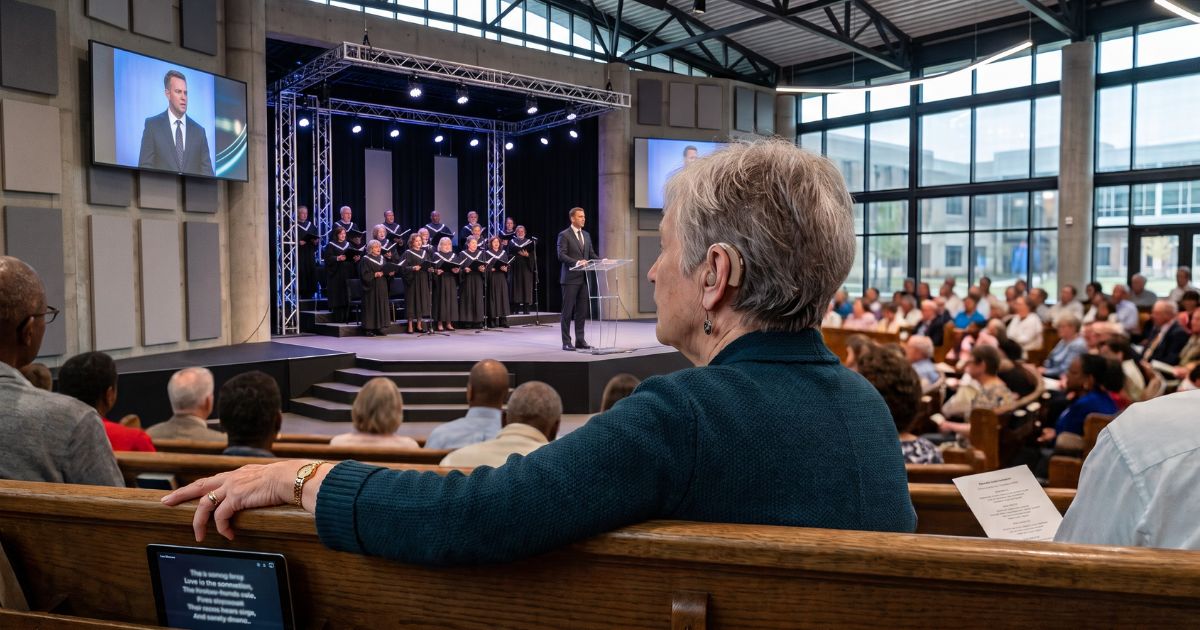
Some of you have been leaning forward in your seat, watching the pastor’s mouth, filling in the words you missed. You've gone home from church tired from the effort of listening. You never said much about it, and I understand why. Starting this Sunday, you have another option. Faith Bible Church of Lake Charles now broadcasts our worship service audio via Auracast, so it goes straight to your ears. What Auracast Is Auracast is a new Bluetooth broadcast standard. Think of it like Wi-Fi, only for sound. Our transmitter sends the audio from the soundboard over the air, and your device tunes in to that broadcast. You hear the sermon, the Scripture reading, the announcements, and the songs, clean and clear, without the room noise and echo mixed in. This replaces the old assistive listening equipment that many churches still use. No neck loop. No fiddling with a receiver that squeals when you turn it up. The sound quality is better, and more than one person can listen at the same time without any loss. Why We Did This Hearing loss is common, and most people who have it stop mentioning it. They nod along, piece the sermon together from what they caught, and go home without saying anything. That bothers me. So then faith comes by hearing, and hearing by the word of God. (Romans 10:17) I take that seriously as a pastor. If the Word is preached and half of it never reaches you, something needs to change. Getting the sound to you is our job, and we've done something about it. Three Ways to Connect There are 3 ways to listen, and you can use whichever fits you. 1. Your hearing aids. Some newer hearing aids and cochlear implants receive Auracast broadcasts directly. If yours were made in the last couple of years, there's a good chance they can. Check with your audiologist, or bring them on Sunday, and we'll test them with you. 2. Your phone and earbuds. Some newer earbuds and phones can join an Auracast broadcast the same way they'd join a Wi-Fi network. Support is still growing, so this works on some devices and not others. Again, bring what you have, and we'll try it. 3. A loaner listening device from the church. If your devices don't support Auracast yet, we have listening devices you can request at the sound booth in the back of the auditorium. Put on the headset, and you're set. Return it on your way out. There's no cost, no signup sheet, and no need to explain yourself to anybody. How to Get Started This Sunday Come a few minutes early and stop by the sound booth in the back of the auditorium. Ask for a listening device, or ask for help connecting your own hearing aids or earbuds. Somebody there will get you set up. If it takes a few tries, that's fine. This is new for us, too, and we'd rather work it out with you than have you sit through another service missing half of it. For Family Members If you're reading this and thinking about your mother, your husband, or the friend you sit beside every week, be the one who brings it up. People with hearing loss often don't ask for help. They've learned to nod along and piece it together later. A gentle offer from you may be what opens the door. You can also come with them Sunday and stop by the sound booth together. It takes about 2 minutes. What You Should Know Going In Auracast is new technology, and device support is still catching up. Some hearing aids advertise Auracast but need a software update from the manufacturer before it works. If yours doesn't connect right away, don't give up on it. Use one of our listening devices for now, and check with your audiologist about an update. We'll keep the loaners available regardless. Nobody at Faith should have to buy new equipment to hear a sermon. Finding Auracast in Other Places Once you learn to use this, you'll want it everywhere else. Theaters, airports, doctors' offices, and other churches are starting to add it, though the rollout is uneven and there's no sign on the door telling you who has it. A site called HearFinder keeps a public map of venues with Auracast, hearing loops, and other assistive listening systems. You can search by city or zip code and filter by the type of place. If you're traveling or planning an evening out, check it before you go.

June 9, 2026 • 7 Minute Read
How to Forgive Someone Who Isn't Sorry
You've replayed it more times than you'd admit. What they said, and the way they walked off like nothing happened. Part of you keeps waiting for the apology, the moment they finally own it. It hasn't come, and you're starting to think it never will. Beneath the hurt, a stubborn thought has settled in. They're not even sorry, and forgiving them feels like letting them win. The question that keeps you stuck Here's a question you might be thinking. If they never apologized and never admitted they were wrong, it feels somehow wrong that the work of forgiving should land on you. The person who did the damage gets to walk free while you do the labor of letting it go. That instinct for fairness is good. God put it in you, and He cares about justice more than you do. The trouble is what we do with the instinct when the apology never comes. We hold the offense like collateral, waiting on a payment the other person may never make. And while we wait, the resentment grows. Forgiveness and reconciliation are not the same thing Here's the piece almost everyone misses, and it changes the whole picture. Forgiveness and reconciliation are two different things, and you've probably been treating them as one. Forgiveness is something you do on your own. You release the debt. You give up your right to collect what they owe you, the apology you're owed, and the satisfaction of seeing them pay. You hand the account to God and take your hands off it. This is between you and the Lord, and it goes ahead whether or not the other person ever moves. Scripture commands it without conditions: "And be kind to one another, tenderhearted, forgiving one another, even as God in Christ forgave you." (Ephesians 4:32) Reconciliation is a different matter. Reconciliation is the relationship rebuilt, and trust restored. That takes two people. It depends on the other person owning what they did and changing. Jesus describes that side of it: "If your brother sins against you, rebuke him; and if he repents, forgive him" (Luke 17:3). Their repentance opens the door to a restored relationship, So hear the difference. You can forgive someone who never says sorry. You cannot rebuild trust with someone who refuses to change. The first one is your obligation before God. The second one depends on them. You were forgiven a debt you couldn't repay There's a reason God can ask you to release someone who hasn't earned it. He did it for you first. Jesus told a story about this. A servant owed his king ten thousand talents, a debt he could never repay. He begged for mercy, and the king forgave the whole thing. Then that same servant went out, found a man who owed him a small sum, and had him thrown in prison over it. When the king heard, he was furious. "Should you not also have had compassion on your fellow servant, just as I had pity on you?" (Matthew 18:33). That's the math of grace. Whatever this person owes you, it's the small sum. What you owed God was the ten thousand talents, and He canceled it at the cross. When Peter asked Jesus how many times he had to forgive and offered seven as a generous number, Jesus told him, "up to seventy times seven" (Matthew 18:22). In God's kingdom, there's no limit to forgiveness. Hand them to God instead of holding the grudge Here's the part that holds most people the longest. You want them held accountable. You want someone to see what they did and name it. That desire isn't petty. It's a longing for justice, and God shares it. And the relief is this: the justice you're aching for matters to God, and it's His to deliver, not yours. "Beloved, do not avenge yourselves, but rather give place to wrath; for it is written, 'Vengeance is Mine, I will repay,' says the Lord." (Romans 12:19) Read that as good news. You can set down the burden of being judge and collector, because God has not forgotten a thing. He sees what was done to you with more clarity than you have. When you forgive, you hand the matter to God and trust Him to weigh it rightly. The wrong still counts. You're letting the right Judge keep the books. A few verses earlier, Paul writes, "If it is possible, as much as depends on you, live peaceably with all men" (Romans 12:18). As much as depends on you. The rest depends on them, and on God. You can forgive and still keep your distance This is where many believers get stuck. Forgiving someone does not require letting them back into your life as though nothing happened. You can release a person fully while still maintaining a protective boundary between you. If someone has been abusive or has shown over and over that they won't change, wisdom may call for limited contact or none at all. That can be the loving choice for everyone involved. You forgive them before God and stop rehearsing the offense in your mind. You can also decline to hand them another chance to wound you. Forgiveness opens your hands. It says nothing about whether you leave the gate unlocked. What this looks like day to day Forgiveness is rarely one and done. You decide to release the person, and then a memory surfaces, and the resentment is back at the door. That's normal. Forgiving is something you may have to do again tomorrow, and the day after. Returning to it is part of the work, the same way you tend a wound more than once. A few things that help. Name the thing you're releasing, out loud, to God. Tell Him the actual offense, and tell Him you give up your right to collect on it. Vague forgiveness slips away by morning. A named debt is one you've genuinely handed over. Pray for the person, even when you'd rather not. You don't have to feel warm toward them to ask God to work in their life. Praying for someone has a way of softening the ground in your own heart. Get help when the bitterness won't lift. If you've been gripping this for months and it's poisoning your sleep and your relationships, talk with your pastor or a trained counselor. Bitterness left alone tends to deepen, and there's wisdom in letting someone help you work through it. The marker that you've forgiven someone shows up slowly. It's the day you can think about them, and the anger no longer flares up. You may still feel the sting of what happened. The grip on you is gone. Free before the apology comes Here is what I want you to hold onto. Your freedom does not wait on their apology. Think about the cross. While the soldiers were still driving in the nails, before a single one of them was sorry, Jesus prayed, "Father, forgive them, for they do not know what they do" (Luke 23:34). He forgave in the middle of the wrong, with no apology in sight. That's the pattern you've been given, and the grace you've been handed. You may never get the words you've been waiting for. You can still be free. Forgiveness is the key you hold in your own hand, and you can turn it today.

June 2, 2026 • 8 Minute Read
What the Bible Says About Anxiety (And What It Doesn't)
It's late, and the house has gone still. You should be asleep. Instead, you're staring at the ceiling while the same worry circles your mind for the hundredth time. Money, or your health, or your kid, or a thing you can't even put a name to. You've prayed about it. You've told yourself to trust God, but the knot in your chest is still there. If that's where you are, I want to say something before we hear what the Bible has to say. You are not a weaker Christian because your mind won't slow down. Somewhere along the way, many of us picked up the idea that faith and fear can't coexist in the same person. That idea has done damage to more believers than I can count, and it isn't what Scripture teaches. The idea that's hurting you Here's the belief, said out loud: a strong Christian would trust God and feel calm, so if you're anxious, your faith must be weak. Most people never say it that plainly. They just feel it as shame stacked on top of the worry they already have. The idea usually comes from one verse, read without fully understanding it. Paul writes, "Be anxious for nothing" (Philippians 4:6), and we hear a command to switch off a feeling. So we try. The feeling stays. And we decide the problem must be our faith. Let me set that verse down for a minute and look at who in the Bible felt what you're feeling. People God loved felt this Elijah had just won the biggest victory of his life. He'd called down fire from heaven in front of the whole nation. Days later, he was sitting alone under a broom tree in the wilderness, worn out and afraid, asking God to take his life (1 Kings 19:4). This is one of the boldest prophets in the Old Testament, flat on the ground and done. Look at how God answered him. There was no lecture about weak faith. God let him sleep. He sent an angel with food and told him to eat. Then, after the rest and the meal, God met him with a low whisper and gave him his next assignment (1 Kings 19:5-18). When God found His exhausted prophet at the bottom, He started with rest and a meal. David lived a good part of his life on the run, and you can hear it in the Psalms. "Why are you cast down, O my soul? And why are you disquieted within me?" (Psalm 42:5). He talked to his own troubled heart, and he took the trouble straight to God instead of hiding it. Then there's Jesus. In the garden of Gethsemane, the night before the cross, He told His friends, "My soul is exceedingly sorrowful, even to death" (Matthew 26:38). Luke, who was a physician, wrote that His sweat became "like great drops of blood" (Luke 22:44). The sinless Son of God, under so much distress that His body broke out in blood. He didn't pretend He was fine. He fell on His face and brought it to His Father. If anxiety were proof of weak faith, you'd have to explain Elijah, David, and the Lord Jesus Himself. The feeling showed up in the most faithful lives in the Book. God never once shamed them for it. What "be anxious for nothing" really means Now go back to what the Apostle Paul said in Philippians. Read the whole sentence slowly: "Be anxious for nothing, but in everything by prayer and supplication, with thanksgiving, let your requests be made known to God; and the peace of God, which surpasses all understanding, will guard your hearts and minds through Christ Jesus." (Philippians 4:6-7) Paul gives the anxious person somewhere to put the fear. The prescription is in the second half: take it to God. Many people hear "be anxious for nothing" as an order to feel calm by sheer effort. Paul is pointing them somewhere better than effort, to the ears of a Father who is listening. That feeling that grips you when you least expect it is human, and Scripture treats it that way. Where the Bible presses is on what you do with the worry next. Paul answers it with prayer. He points the worried person straight to God's ears. Jesus on the birds and the wildflowers Jesus taught more about worry than almost anyone in the Bible, and He did it without a hint of shame. In the Sermon on the Mount, He pointed at the birds. "They neither sow nor reap nor gather into barns; yet your heavenly Father feeds them. Are you not of more value than they?" (Matthew 6:26). Then He pointed at the wildflowers, dressed better than King Solomon, and gone by the end of the week. His logic is simple. The God who feeds sparrows and clothes weeds has not forgotten you. He follows it with a plain question: "Which of you by worrying can add one cubit to his stature?" (Matthew 6:27). Worry feels like you're doing something about the problem. You aren't. It spends your strength and changes nothing about tomorrow. Then comes the help for the worn-out mind: "do not worry about tomorrow, for tomorrow will worry about its own things. Sufficient for the day is its own trouble" (Matthew 6:34). You were never asked to handle every fear at once. You're asked to face today and to leave tomorrow with God. Jesus sets the pattern in the same breath: "seek first the kingdom of God and His righteousness, and all these things shall be added to you" (Matthew 6:33). Now, a word about sin, because it's the question beneath a lot of this. The anxiety that rises up in you is not automatically sinful. Jesus felt distress in Gethsemane and remained sinless throughout it. Worry crosses into sin when we hear His invitation to bring it to the Father and choose to keep gripping it ourselves. The feeling is human. The refusal to hand it over is where we get into trouble. So the aim of all this is to keep giving the fear back to God, again and again, and to trust Him with what only He can handle. God is not put off by your anxiety People worry that bringing a fearful, doubting prayer to God is somehow disrespectful. Scripture says the opposite. Look at this line from the Psalms: "In the multitude of my anxieties within me, Your comforts delight my soul." (Psalm 94:19) God put the word "anxieties" in His own songbook. He kept a man's racing mind in the prayers He preserved for us. Peter says it plainly: "casting all your care upon Him, for He cares for you" (1 Peter 5:7). The reason you can hand Him your fear is that your fear matters to Him. And what about the peace that Paul promised? That peace is God staying near, while you’re still feeling fearful. Remember Gethsemane: Jesus had His Father's peace, and His sweat still fell like blood. The peace God gives is His presence in the storm. What you can do Here's what helps when the worry comes back, and none of it requires you to feel strong first. Pray one line of Scripture, slowly. You don't need a long speech. Breathe in, "The Lord is my shepherd." Breathe out, "I shall not want" (Psalm 23:1). Let one true sentence fill your mind in place of the worry. Name what you’re worrying about to God. Say the thing itself out loud: the bill, the test results, the phone call you're dreading. Vague prayers are easy to pray and easy to forget. A named worry is one you've genuinely handed over. Pray out loud, and pray with someone if you can. Anxiety grows in isolation. It loses some of its grip the moment another person knows what you're afraid of and prays it with you. And get help when you need it. If worry has been stealing your sleep for days or making it hard to manage your normal life, talk to your doctor or a trained counselor. Seeing a physician about anxiety is wise, as is seeing one about your heart or your knee. God works through medicine and good counselors as surely as He works through prayer. Your pastor and your doctor are not in competition with your God. The thing to hold onto tonight Here is what I want you to know before you put the phone down. The worried mind at 2 a.m. is not outside the reach of God. "The Lord is near to those who have a broken heart, and saves such as have a contrite spirit." (Psalm 34:18) Near. He is not waiting for you to calm down first. He is close right now to the version of you that can't stop the racing thoughts. You can stop trying to feel brave enough to earn His attention. He is already close, and He already cares.

May 27, 2026 • 7 Minute Read
I Don't Feel Like a Christian Anymore: What to Do When Faith Feels Far Away
You sat in the same pew you've sat in for fifteen years. The songs you used to love came up on the screen, and your mouth knew the words. Your heart didn't. Or maybe it was the kitchen table at six in the morning. Bible open. Coffee getting cold. Your eyes moved across the page, and nothing landed. You closed it and wondered if you ever really meant any of it. If that's where you are, I want to tell you something before we go another sentence. Feeling far from God is one of the most common experiences in the Christian life. It is almost never proof that your faith is gone. Stay with me for a few minutes. There are some things going on under the surface here that are worth knowing. Name what's going on People lump three different things together when they say, "I don't feel like a Christian anymore." Naming yours is the first step toward dealing with it. The first is spiritual dryness. The warmth is gone. The feelings have dried up. But you still want God. You're reading this post because you're worried about your faith, which is itself a sign your faith is alive. Dead faith doesn't worry about being dead. The second is doubt about a question that's nagging at you. A question about suffering after you lost someone. A question about Scripture after you read something that shook you. A question about your own salvation after a hard week. Doubt is a different problem with a different fix, and it deserves its own conversation. We'll have that one in a few weeks. The third has a cause that the person already knows. Some people who say they feel far from God have walked into a sin they don't want to leave. They know it. They feel it. The distance is real, and it has a cause they could name if they were willing. Most readers of a post like this one are in the first bucket. The warmth has gone out, and you don't know why. You haven't done anything terrible. You haven't stopped believing. You just can't feel Him anymore, and the silence is starting to scare you. That's spiritual dryness. It has a name because it happens to a lot of us. You're in good company David wrote a song about this. He wasn't a backslider. He was the king of Israel and the man God called a man after His own heart. And in Psalm 13, he writes, "How long, O Lord? Will You forget me forever? How long will You hide Your face from me? How long shall I take counsel in my soul, having sorrow in my heart daily?" (Psalm 13:1, 2 NKJV). That’s the voice of a believer who can’t feel God. It is in the Bible on purpose. Elijah is another one. The same prophet who called fire down from heaven on Mount Carmel ended up under a broom tree in the wilderness, asking God to take his life (1 Kings 19:4). He was exhausted and done. God didn't lecture him. He gave him food and sleep and met him after he had rested. If David and Elijah felt far from God and were still loved by Him, you are in better company than you think. Why this happens to people who love Jesus I'll give you a few reasons. One of them is probably yours. You're in a stretch of life that's wearing you out. You lost someone. You're caring for a parent who no longer recognizes you. The baby isn't sleeping. The job is eating you alive. When the body is exhausted and the nerves are frayed, the soul feels dry. That's not a sign that something is wrong with your faith. That's being a human in a broken world. There's sin in your life you haven't dealt with. Not the dramatic kind. The kind you've made peace with because everyone else seems to be making peace with it, too. Sin doesn't have to be obvious to put distance between you and God. Sometimes, the things we excuse the easiest do the most damage. You're disappointed with God, and you haven't said it out loud. You asked Him for something that mattered, and the answer was no, or the answer hasn't come, and you've been polite about it ever since. Politeness with God looks holy on the outside. On the inside, it puts a wall up. Your spiritual rhythms have slowly fallen off, and you didn't notice. The Bible reading went from every other day to once a week, then to whenever you remember. Prayer became a sentence in the car. Church became when nothing else was scheduled. The fire in a fireplace goes out the same way. Nobody throws a bucket of water on it. The logs just stop getting fed. I'll tell you something. I've been in this place myself. There was a stretch where I was phoning it in. My spiritual life felt dry, and I knew it. I kept doing pastor things because that's what pastors do, and underneath it, I was running on fumes. What turned it around was nothing dramatic. I admitted it to myself first. Then I admitted it to God. I asked the Holy Spirit to reignite my passion for Him. And I started praying again and opening the Bible again, even when it felt like I was going through the motions the first few days. The fire came back. Not because I worked it up. Because God met me when I stopped pretending. What to do when you can't feel God You don't have to feel something to do something. The doing usually comes first, and the feeling follows it later. Open your Bible anyway. Start in the Psalms. They were written by people who felt every range of human emotion, including the one you're feeling right now. Psalm 13. Psalm 42. Psalm 88. Read them out loud if you can. Tell God the truth. Out loud. Even if the sentence is, "God, I can't feel You, and I'm scared." He's not put off by it. He already knows it. Saying it puts the wall down on your side. Keep showing up at church. I know that's the last thing you feel like doing when you're in this place. Show up anyway. God uses the body of Christ to hold us up when our own legs give out. Sitting next to people who are worshiping is sometimes how the warmth starts to come back. Tell one person you trust. A spouse. A pastor. A friend who won't panic on you. Spiritual dryness grows in the dark. It starts to lose its grip the moment you name it out loud to someone who loves you. Stop measuring your faith by your feelings. Your feelings move. They move with the weather, with how much you slept, with what you ate, with what's happening at home. If you are in Christ, your standing with God is not riding on whether you woke up feeling spiritual today. It's riding on what Jesus did for you on the cross, and that didn't move. What God says about people who feel far from Him I want you to read this slowly. "A bruised reed He will not break, and smoking flax He will not quench" (Isaiah 42:3 NKJV). A bruised reed is a piece of marsh grass that's been crushed. It's bent over. It's barely holding together. A smoking flax is the wick of an oil lamp when the oil has run out. It's not burning anymore. It's just smoking. Both of them are pictures of someone who's almost done. Someone whose faith looks like it might be on its last breath. What does God do with the bruised reed and the smoking flax? He does not break them off. He does not snuff them out. He tends them. If your faith feels like a smoking wick right now, that's not a verdict against you. That's the exact condition God promises to handle with care. And one more. "The Lord is near to those who have a broken heart, and saves such as have a contrite spirit" (Psalm 34:18 NKJV). Near. Not distant. Not disappointed. Near. You may not feel Him. That doesn't mean He's not there. Feelings move. His grip on you doesn't.

May 26, 2026 • 5 Minute Read
Defeating Life's Giants
There's a kind of problem that doesn't go away when you ignore it. Maybe it's a fear that keeps coming back. Maybe it's a sin you've fallen into more times than you can count. Whatever it is, you've tried to handle it on your own, and it hasn't worked. Most of us have something like this. The Bible has a name for it. It calls these problems giants. The story of David and Goliath shows us how to face them. The story Israel's army had been camped across a valley from the Philistine army for forty days. Every morning, a giant named Goliath came out and shouted insults at the Israelite soldiers. Every morning, no one stepped up to fight him. The whole army was paralyzed by fear. David was a teenager. He wasn't a soldier. He had come to the camp to bring food to his older brothers. When he heard Goliath, he didn't see what everyone else saw. He saw a man defying the God of Israel. He volunteered to fight. When King Saul tried to put armor on him, David refused. He couldn't move in it. He went out to meet Goliath with five smooth stones and a sling. Before he threw the first stone, he said this: "You come to me with sword, spear, and javelin, but I come to you in the name of the Lord of Heaven's Armies—the God of the armies of Israel, whom you have defied. Today the Lord will conquer you. And then everyone assembled here will know that the Lord rescues his people, but not with sword and spear. This is the Lord's battle, and he will give you to us." (1 Samuel 17:45–47, NLT) Then he killed Goliath with one stone. The story is famous. What it teaches about facing our own giants is less famous. There are four moves David made that we can learn from. Bring the giant into the light The first move is admitting the giant exists. Most of us don't want to do this. We'd rather pretend the fear isn't there, or tell ourselves we'll deal with it later. We push it back into the shadows where we don't have to look at it. David did the opposite. He looked at Goliath and named the problem out loud. Then he volunteered to fight. You have to do the same with whatever you're facing. Name it. Tell someone trustworthy. A giant in the dark only grows. Don't try to fight it alone The second move asks more of you. You have to stop trying to handle it yourself. Saul tried to put his own armor on David. David turned it down. He knew he wasn't going to win this fight by being a better soldier. The fight wasn't his to win on his own. When you're facing a giant, your instinct is to grind through it on your own. You think if you just gave it more effort, you could beat it. You can't. That's not how giants get defeated. This is where prayer becomes a starting point, not a last resort. You bring the giant to God before you try anything else. You ask Him for what you can't get yourself. Trust God to fight for you The third move asks even more. You have to believe God will help. David told Goliath that the battle belonged to the Lord. He wasn't being humble for show. He believed it. Goliath was bigger and more experienced. None of that mattered, because David wasn't fighting alone. Most of us claim to trust God when nothing's at stake. The trust gets tested when the stakes are high. When the diagnosis comes back, or when the sin won't let go, that's the moment when "I trust God" stops being a theological idea and becomes the thing you're doing. You can't trust God in the abstract. You trust Him with the specific giant standing in front of you. See your giant through God's eyes The fourth move changes how you see everything. Israel saw a giant they couldn't beat. David saw a man defying God. Same Goliath, two different views. Whatever you're facing today seems bigger than you because, on your own, it is. But that's not the right comparison. The right comparison is your giant against God. And God is bigger. Seeing the giant through God's eyes changes how you face it. The problem may be just as big as you think. God is bigger. One last thing These four moves don't make the giant disappear. David still had to walk down into that valley. He still had to face Goliath. But he wasn't fighting alone, and he knew it. You're not fighting alone either. Bring the giant out of the shadows and stop trying to handle it by yourself. Trust God with what you're facing, and let Him show you how big it is in light of Him. Then take the next step. The Lord rescues His people. He hasn't stopped.
May 26, 2026 • 4 Minute Read
Why Belonging to a Church Matters
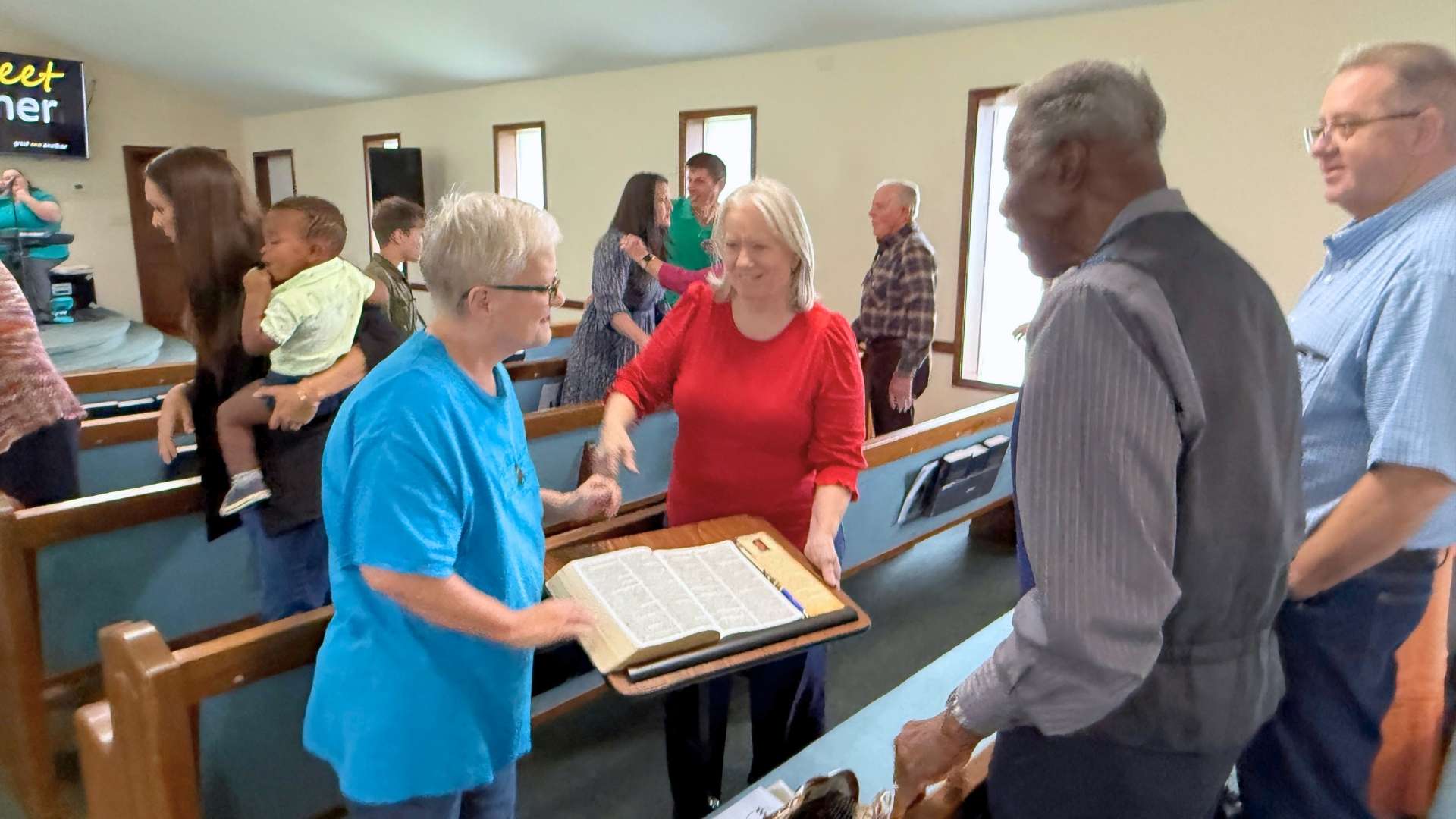
A lot of people think of faith as a private thing. Their walk with God happens between them and the Bible, with the closet door closed. There's something to that. Faith is personal. It's also more than personal. The way the Bible describes the Christian life, you can't really do it on your own. The point here is that you were made to belong to a community of people who follow Jesus together. Here's why it matters. Faith grows in community You can read the Bible alone. You can pray alone. But there are things you only learn from other Christians. How to keep going through grief, from someone who's been there. How to forgive a tough situation, from someone who's done it. These get passed person to person, life to life, in ways books can't replicate. A church family is where that happens. Someone to carry it with you Life will hand you things you can't carry on your own. The diagnosis. The loss you didn't see coming. When that day comes, you need people who know you, who know your situation, and who will show up. A church family is meant to be that. The people who pray for you when you can't pray for yourself. The people who bring meals and sit with you when there's nothing to say. This is one of the deepest reasons God put us in churches. We were never meant to face the worst days alone. Someone to celebrate with you The good days need company, too. The promotion. The kid who came home. If your good news only lives in your head, it loses something. Sharing it with people who love you and love God multiplies the joy. A church family is where your wins get witnessed by people who know what they cost you. Accountability that doesn't shame you You'll hear the word "accountability" thrown around. It can sound harsh, like someone is going to track your sins and call you out. Biblical accountability looks different. It's people who love you enough to ask how you're doing with the things that matter. They ask because they want you to keep growing, not to corner you. You won't get this from acquaintances. It only happens with people you've trusted with the things you carry. A place for your kids to grow up If you have kids, a church family gives them something your home alone cannot. Other adults who know them and pray for them. Other kids who are trying to follow Jesus, too. Your kids need to see that following Jesus is something a whole community does together. That changes how they understand it. What the Bible says The early church wasn't a once-a-week event. The book of Acts describes Christians who met together every day, sharing meals and resources, knowing each other's lives intimately: "All the believers devoted themselves to the apostles' teaching, and to fellowship, and to sharing in meals (including the Lord's Supper), and to prayer. A deep sense of awe came over them all, and the apostles performed many miraculous signs and wonders. And all the believers met together in one place and shared everything they had. They sold their property and possessions and shared the money with those in need. They worshiped together at the Temple each day, met in homes for the Lord's Supper, and shared their meals with great joy and generosity—all the while praising God and enjoying the goodwill of all the people. And each day the Lord added to their fellowship those who were being saved." (Acts 2:42–47, NLT) The picture is bigger than a Sunday morning service. It's a community of people doing life together with Jesus at the center. In Hebrews 10, the writer makes the same point in different words. He tells believers to "consider how we may spur one another on toward love and good deeds, not giving up meeting together, as some are in the habit of doing, but encouraging one another." (Hebrews 10:24-25, NLT) Notice the warning. Some Christians had already gotten into the habit of skipping. The writer tells the rest not to follow them. Final Thoughts A church family doesn't make life easy. The people in it are imperfect, and they will let you down sometimes. You'll let them down, too. But it's worth it anyway. The Christian life was never designed to be lived alone. The community of believers is where you grow as a Christian, and where people show up for each other. If you've been trying to do this on your own, take a step toward a church family. Not all at once. Just start.

May 26, 2026 • 5 Minute Read
10 Ways to Build a Christ Centered Home
You don't get an evening alone to think through your kids' spiritual life. You get the half-second between dinner cleanup and the homework battle. You get the moment before bed when you're already tired. This is where faith gets passed down. Not in a class or a program. In the small moments of a normal week. The Bible tells us that what we do in our homes matters. The choices you make about what you talk about and what you make time for shape your kids' picture of who God is. Here are ten ways to build a Christ-centered home. Some of them will fit your family right now. Others will not. Take what helps and leave the rest. Make time for family devotions Set aside regular time to read the Bible together. It doesn't have to be long. Ten minutes after breakfast or before bed is enough to start. What matters is consistency. Find a routine that fits your family's rhythm. Some families do this in the morning. Others do it in the evening. Pick what you can stick with for more than two weeks. Pray together Prayer is how kids learn that God is listening. They watch you pray, and they learn what prayer is. You don't need polished words. You need to be open in front of your kids about what you're asking God for. Pray over meals and before bed. Let your kids hear you bring whatever you're carrying to God. Create a home that points to Him Your house tells your kids what matters to you. The things on the walls and the conversations at dinner add up over time. All of it teaches them what your family is about. You don't have to fill the house with religious decorations. But you can put a Bible on the coffee table where it gets used. You can put up something with a verse that matters to you. You can let the house, in small ways, say that this family follows Jesus. Talk about faith openly Most kids don't ask the big questions in the church parking lot. They ask them in the car or at bedtime, when their guard is down. Be ready to talk, and be okay not having all the answers. Tell them what you believe, and tell them when you don't know. Your faith should be something you're working out too, not a finished package you handed down. If they bring up something that throws you, don't shut it down. The questions that make you uncomfortable are usually the most important ones. Serve together Faith that doesn't move out into the world goes stale. Find a way for your family to serve someone outside your house. Maybe the food pantry, or a neighbor who could use help with the yard. Bring your kids with you. Let them see what it looks like to give time and effort to someone who can't repay you. That's where they learn what Jesus meant by loving your neighbor. Share your faith with others Your kids learn how to talk about Jesus by hearing you do it. If you only talk about your faith at home, they'll learn that faith is private. If you talk about it with the people in your life, they'll learn that faith is something you bring with you. Invite people to church and let your kids hear you tell stories about what God is doing in your life. They learn from what you do out loud. Make church a priority Show up to church regularly and bring your kids. Let them be part of the community of believers around you. Church gives kids something a Christian home alone cannot give. Other adults who care about them, and a bigger picture than just their own family. When church gets inconvenient, go anyway. Your kids are watching what you protect time for. Encourage their own time with God As your kids get older, they need their own faith, not just yours. Give them age-appropriate Bibles. Let them see you doing your own devotions and hear you talk about what you're learning. If they ask questions about what they're reading, take it seriously. Their faith is becoming theirs, and they need you to treat it that way. Keep Christ at the center of holidays Christmas and Easter come with a lot of pressure to do them right. Presents, traditions, and family expectations. The actual reasons for these days can get buried. Be intentional about pointing back to Jesus during these seasons. Read the nativity story together at Christmas. When Easter comes, talk about why we have Easter at all. The holidays will fill up with everything else if you let them. Live what you teach This one matters more than the other nine combined. If you tell your kids that following Jesus matters, but they don't see it in how you treat their mother and how you handle stress, they'll know. They watch what you do, not what you say. You don't have to be perfect. You have to keep trying. Show them what it looks like to follow Jesus when you mess up. Apologize when you should, and try again the next day. That's the most powerful thing you can teach them about grace. One last thing Building a Christ-centered home is a thousand small choices made over the years. You'll get some of them right. You'll get some of them wrong. Keep showing up. The kids you're raising are watching the God you say you serve. Let them see Him in you.

May 26, 2026 • 6 Minute Read
Move From Stress to Gratitude by Meditating on the Psalms
There's a kind of tiredness that comes from being scared for too long. It's the exhaustion that sleep doesn't fix. Watching the news makes it worse. The Psalms have been carrying people through this kind of stretch for thousands of years. They give us a pattern we can use when we don't know what to pray. The pattern is simple. We cry out to God about what's happening, and we hold onto hope because help is coming. Two moves. The first one tells the truth. The second one takes faith. Three kinds of seasons Walter Brueggemann, an Old Testament scholar, noticed something while he was studying the Psalms. He saw three different kinds of life moments showing up in them. He called them seasons of orientation, disorientation, and new orientation (Brueggemann, 1984). When life is in orientation, things are working. The bills are getting paid, and you can feel God's blessings. This is where we hope to spend most of our days. Then something breaks. Maybe a diagnosis comes back bad, or the job ends. We move into disorientation, where the ground we trusted is gone. This is what most of the Psalms are written from. After a long stretch of disorientation, we sometimes find our way to a different kind of solid ground. The crisis isn't always over. But we've learned something we couldn't have learned any other way. Brueggemann called this new orientation. It's a place of gratitude that has been through something. The Psalms walk us through all three. That's why they matter so much when life turns difficult. What the psalmist does When you read a psalm of lament, you'll see the writer doing something that might surprise you. They complain to God. Out loud. With specifics. They tell God what's wrong and why they feel forgotten. They don't dress it up. They don't pretend to have faith they don't have. They give God the situation as it stands. Then, somewhere in the middle of the psalm, something shifts. The writer remembers what God has done before. The remembering does something to the complaint. While it doesn't erase the pain. It puts the pain in perspective. By the end of the psalm, the writer is praising God. The problem hasn't gone away. He's praising because he's standing on what he remembered. This is the bridge from complaint to praise. We tell God what's wrong, and we let memory feed our hope. Psalm 13 Look at how this works in Psalm 13: "O LORD, how long will you forget me? Forever? How long will you look the other way? How long must I struggle with anguish in my soul, with sorrow in my heart every day? How long will my enemy have the upper hand? Turn and answer me, O LORD my God! Restore the sparkle to my eyes, or I will die. Don't let my enemies gloat, saying, 'We have defeated him!' Don't let them rejoice at my downfall. But I trust in your unfailing love. I will rejoice because you have rescued me. I will sing to the LORD because he is good to me." (NLT) The complaint is right there. He's been waiting. He's tired. Then comes the turn. "But I trust in your unfailing love." That's it. Seven words. The whole psalm pivots on that "but." The writer hasn't been rescued. The enemy is still there. He remembers what's true about God anyway, and that memory brings praise out of him. How to pray this way You don't have to wait for a perfect moment to pray like the psalmist. You can do it on the drive home from a tough meeting, or after the kids have gone to bed. Find a Psalm of lament. Psalm 13 is a good place to start. Read it slowly enough to let it tell you what kind of words you're allowed to say to God. Then make it personal. Find one verse that fits your complaint and make it your own. If the psalmist says, "How long must I struggle with anguish in my soul?" and that's exactly what you're feeling, say it. Pray it back to God. He already knows. Stay there as long as you need to. Some days, the lament is the prayer. Some examples might help. Say you're worried about a child who's pulled away from the family. You can take Psalm 13's "How long must I struggle with anguish in my soul" and pray it about your child. Make it specific. Tell God how long you've been waiting for them to come back, and what you've watched them go through. The psalmist's words take shape as your prayer for your specific situation. When you're ready, find a verse from later in the psalm that turns toward God. "But I trust in your unfailing love." Pray that one too. Mean it as much as you can. The same principle applies when you turn toward trust. "But I trust in your unfailing love" is the prayer of someone who knows that God has loved this child longer than they have. The situation may stay the same. What changes is who you're trusting in the middle of it. You may have to come back to this prayer all day. The fear comes back. The tough conversation comes back. Each time, you can do it again. Lament. Then trust. A word from Paul Paul wrote something to the Thessalonian church that fits here. He said: "Rejoice always, pray continually, give thanks in all circumstances; for this is God's will for you in Christ Jesus." (1 Thessalonians 5:16-18, NLT) Notice the wording. Paul says to give thanks "in all circumstances," not "for all circumstances." There's a difference. You don't have to thank God that your friend is sick. You can thank Him in the middle of your friend's sickness for being there with you. The Psalms taught Paul this. They can teach us too. One more thing If you're feeling disoriented right now, I want you to hear something clearly. God is here. He hears you. The psalmist's confidence didn't depend on his circumstances. It rested on the character of the God he was praying to. That God hasn't changed. Tell Him what's happening. Tell him how scared you are. Then, when you can, remember. He has been faithful to His people for a long time. He'll be faithful to you.

Copyright Faith Bible Church of Lake Charles 2026